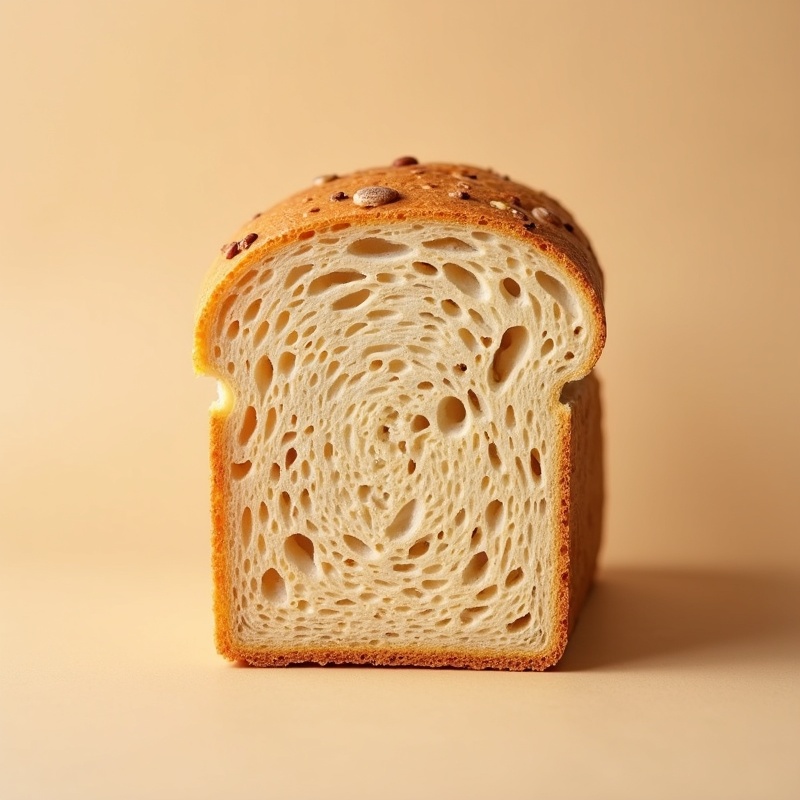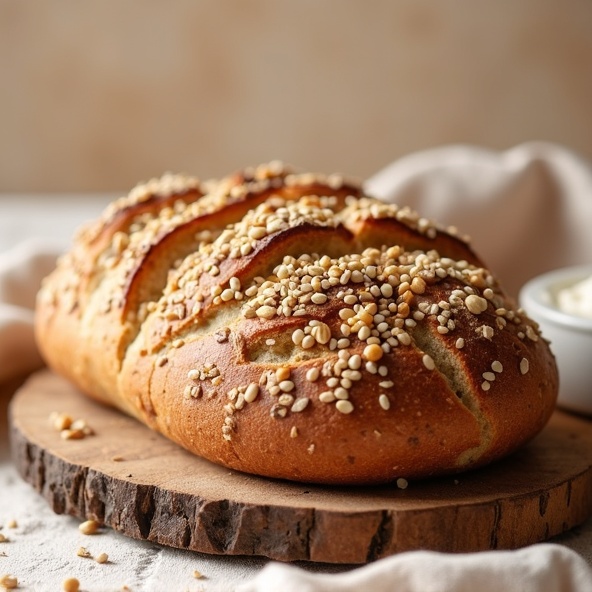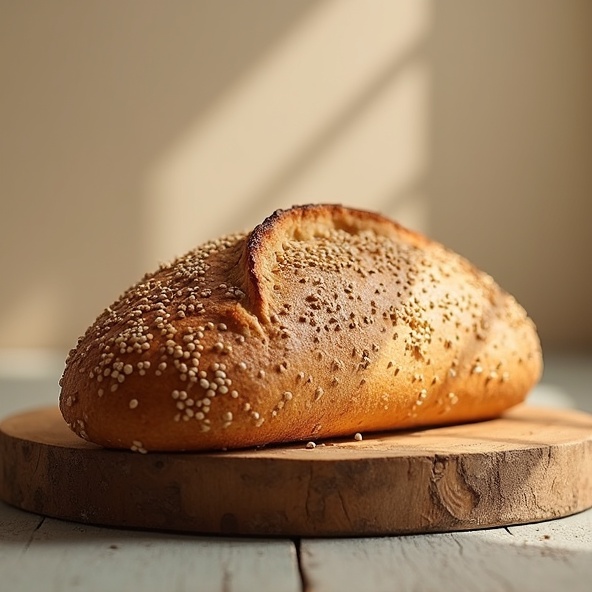
You do not need to start with 100% whole-wheat flour. Half the flour in this recipe is whole wheat; the other half is white bread flour to make shaping easier. The result should not be called 100% whole-wheat bread. For one loaf in an approximately 25 × 11 cm tin, allow 25 minutes of active preparation, 1.5-2.5 hours for rising, 35-45 minutes for baking and time to cool completely.
Ingredients
- 250 g whole-wheat flour
- 250 g white wheat bread flour
- 350 ml water, plus 10-20 ml more if needed
- 5 g instant dried yeast
- 9 g salt
- 15 ml olive oil, plus a little for greasing the tin
Method
- Mix both flours and the instant yeast. Add water, salt and olive oil to form a dough.
- Rest for 15 minutes, then knead for 8-10 minutes. Add reserved water in small amounts if needed.
- Cover and leave for approximately 60-90 minutes until clearly increased in volume.
- Roll the dough gently into a log and place in the greased tin. Let rise again for approximately 35-60 minutes.
- Bake in a preheated conventional oven at 200 °C for approximately 35-45 minutes. Cover loosely with foil if the top darkens early and check that the inside is baked.
- Remove from the tin after a few minutes. Cool completely on a wire rack before slicing.
Why does whole-wheat flour behave differently?
The bran-rich structure absorbs water at a different rate. Dough that looks sticky just after mixing may come together after a short rest, so do not immediately add more flour. Start with 350 ml water and add small amounts if the flour stays dry. Flour varies: aim for soft dough that can still be shaped.
Preparing the tin and dough
Coat the inside of a metal tin with a thin layer of oil. Shape a log close to the length of the tin without compressing it too much. Placing the seam underneath gives a neater surface. A shorter or narrower tin changes the height and baking time. Do not fill an undersized tin to the brim.
Follow the rise
Look for increased volume during the first rise and a lighter dough during the second rise in the tin. Do not let the surface dry out. Overproofed dough can collapse in the oven, so do not depend only on timing. Record water and waiting times to learn how your flour behaves.
Be patient before slicing
Carefully turn out the loaf a few minutes after baking and cool on a rack. Leaving it in the tin too long can make the bottom damp. Thin slices cut while hot may be crushed. Once cool, cut even slices and freeze in two-slice packets.
Three ways to serve it
Make a breakfast open sandwich with curd cheese and tomato, a lunch sandwich with hummus and cooked vegetables, or lightly toasted slices alongside soup at dinner. Add wet toppings at serving time. Taste the bread plain before increasing oil or loading it with cheese. There is no single correct number of slices for everyone.
What this recipe does and does not promise
This is a beginner formula to adapt at home, not a guaranteed result in your oven. Changing the flour ratio also changes water and rising requirements. It contains wheat and gluten: whole-wheat content does not make it gluten-free or suitable for a particular medical condition. Nutritional values require the actual ingredient labels.